


 Red wine
 White wine
 Rosé wine
 Primeurs
 Sherry and Port wine
 Sweet wine
 Orange wine
 Vermouth
 Champagne
 Cava
Cava Prosecco
 Lambrusco
 Crémant
 Moscato d'Asti
 Franciacorta
 Pet-Nat
 Corpinnat
 Other sparkling wines
 Rhum
Rhum Gin
Gin Whisky
 Vodka
Vodka Cognac
 Brandy
 Pastis
 Tequila
 Mezcal
 Grappa and Eau de vie
 Calvados
 Liqueurs
 Pacharán
 Apéritifs
 Wine gift boxes
 Boxed wines
 Boxed sparkling wines
 Wine bottles and glasses
 Gift card
 Non alcoholic Wine
 Non alcoholic Sparkling wine
 Non alcoholic Gin
 Other non-alcoholic drinks
 Aromas
 Wine conservation
 Decanters and aerators
 Bottle identifiers
 Corkscrews
 Service
 Glass identifiers
 Cleaners
 Accessories set
 Wine glasses
 Contact

Exploring the DO Ribera del Duero with its President, Enrique Pascual
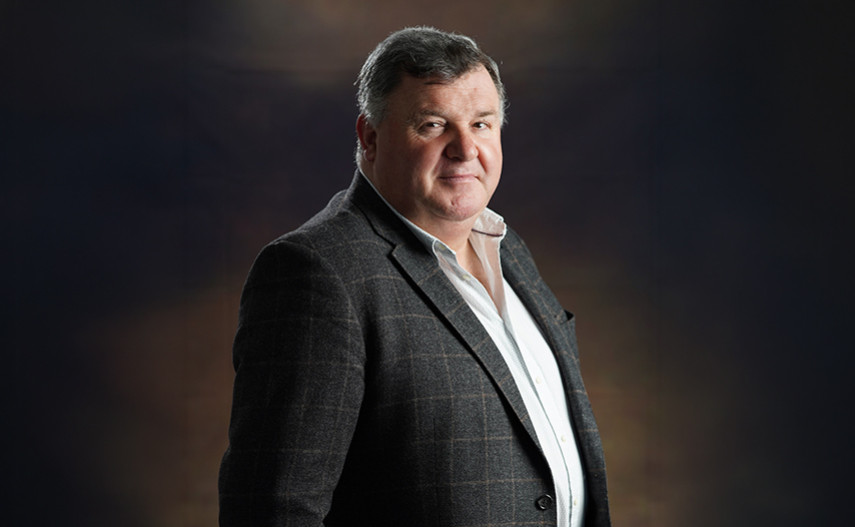
There are individuals who embody a region. Enrique Pascual is one such figure. Over a decade leading the Consejo Regulador de la Denominación de Origen Ribera del Duero attests to this, yet his connection with wine dates back much further, shaped amidst vineyards, frosts, and harvests. Viticulturist, winemaker, and president: three perspectives converging on a singular obsession, to elevate—without losing the essence—one
From Fuentelcésped in Burgos, where Bodegas Pascual stands, it has been a privileged witness to a rapid transformation in historical terms. Although the DO Ribera del Duero was established in 1982, the region's winemaking culture has roots that stretch back over a thousand years. As he succinctly puts it: “We are young as a denomination, but with an ancient tradition”. It is precisely in this balance between institutional youth and ancestral wisdom that much of its identity lies.
Growing Without Losing the Soul
This duality between past and future is even embodied in the headquarters of the Regulatory Council, located in the town of Roa. A historic building —once a monastery, hospital, and Civil Guard barracks— coexists with contemporary architecture featuring bold geometric lines. Inside, the history of wine in the region unfolds from centuries past. Upon entering the reception, a framed 13th-century ordinance reminds visitors of how vineyards were already protected from grazing in the Villa de Roa at that time.
Nothing is coincidental. Everything is part of a narrative that seeks to highlight the value of the territory. And it is no easy task. “Gaining recognition for a territory is very challenging”, he admits. It requires coordination, deep sector knowledge, and above all, a shared vision.
The Vineyard as the Origin of Everything
In Ribera del Duero, everything begins in the vineyard. The altitude, poor soils, and extreme climate offer nothing for free, but when well-managed, they give everything. “The climate and soil, along with our high standards, make us unique.” This almost obsessive demand has been crucial in positioning the denomination. In an increasingly competitive global market, Ribera del Duero has decisively chosen to prioritise quality above all else. Pascual summarises it bluntly: “We are one of the most demanding councils, and that is what has placed us at the top.” Today, consumers —both within and outside Spain— recognise Ribera del Duero as synonymous with quality. “They know we do not disappoint”, he asserts confidently.
But this same demand prevents complacency. Recognition is not a destination, but a drive to keep progressing. “There is still a long way to go”, especially in the international arena. The national market responds robustly, but the true challenge lies in continuing to grow beyond our borders.
Albillo Mayor: The Best-Kept Secret
In this ongoing process of evolution, a silent protagonist begins to claim its space: the albillo mayor variety. Although Ribera del Duero is globally renowned for its reds, this white represents one of the most intriguing prospects for its immediate future.
Its official incorporation has not been straightforward. It has required years of legislative adjustments and consensus within the sector. However, today it emerges as a genuine oenological gem. Historically, albillo mayor was used as a blending variety with tempranillo, adding freshness to traditional claretes. Now, its ability to express the terroir of Ribera del Duero with an unexpected personality elevates it to its own category. Calcareous soils, altitude, and extreme climate translate into wines of vibrant freshness, elegant structure, and a depth that surprises even the most knowledgeable.
Pascual explains it simply: “At first, it doesn't seem like much, but when well-crafted, it is very rewarding”. In that phrase lies an entire philosophy; that of a territory that still has much to reveal.
Perhaps that is the true key to Ribera del Duero. A combination of pride and humility. Pride in what has been achieved in just four decades; humility to continue learning, adjusting, and growing.
And in that balance —demanding, dynamic, alive— its story continues to be written. A story that, like its finest wines, still has a long journey ahead.