



 Red wine
 White wine
 Rosé wine
 Primeurs
 Sherry and Port wine
 Sweet wine
 Orange wine
 Vermouth
 Champagne
 Cava
Cava Prosecco
 Lambrusco
 Crémant
 Moscato d'Asti
 Franciacorta
 Pet-Nat
 Corpinnat
 Other sparkling wines
 Rhum
Rhum Gin
Gin Whisky
 Vodka
Vodka Cognac
 Brandy
 Pastis
 Tequila
 Mezcal
 Grappa and Eau de vie
 Calvados
 Liqueurs
 Pacharán
 Apéritifs
 Wine gift boxes
 Boxed wines
 Boxed sparkling wines
 Wine bottles and glasses
 Gift card
 Non alcoholic Wine
 Non alcoholic Sparkling wine
 Non alcoholic Gin
 Other non-alcoholic drinks
 Aromas
 Wine conservation
 Decanters and aerators
 Bottle identifiers
 Corkscrews
 Service
 Glass identifiers
 Cleaners
 Accessories set
 Wine glasses
 Contact

Getting to know Estefanía Rodero, Head of Business Development at Pago de los Capellanes
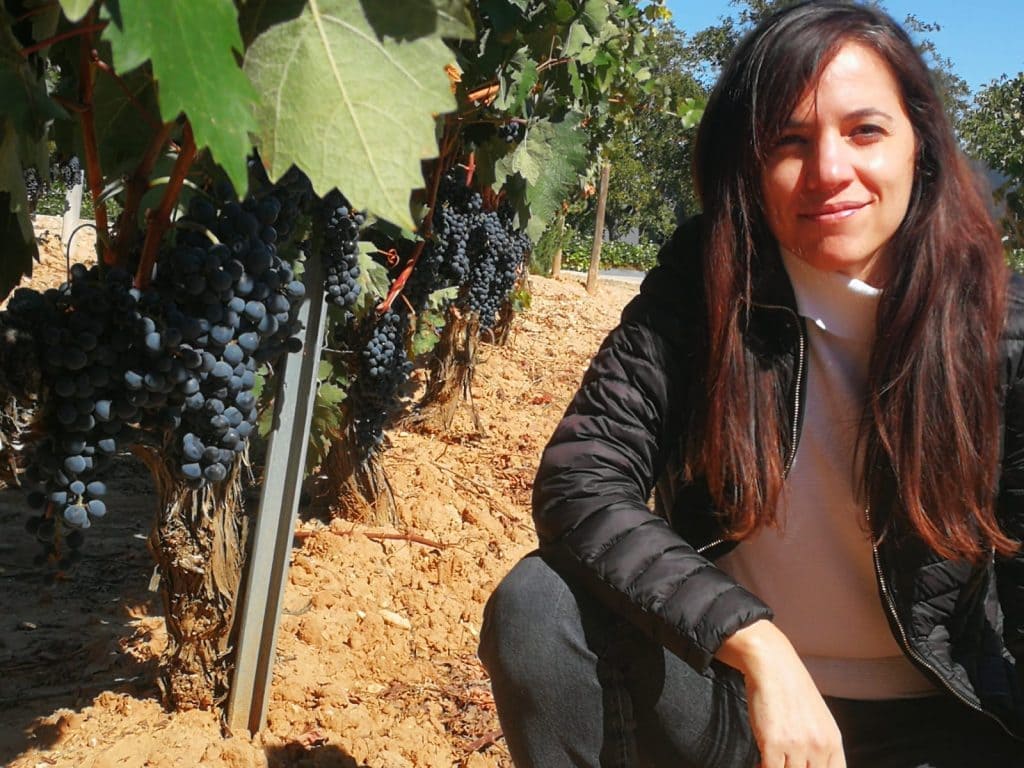
A new generation of the Rodero family has joined the family winery and hit the ground running. Estefanía’s surnames are synonymous with a passion for wine. Her parents, Paco Rodero and Conchita Villa have worked hard since 1996 to realise their dream of making complex, long-living, artisan wines in their hometown, Pedrosa de Duero. They passed their expertise onto their daughter who joined the company in 2015 to add her vision to a project that still has a story to tell.
Although the winery was only set up in 1996, the name Pago de los Capellanes is known throughout the world. Where do you think the success of your brand lies?
I think our success is down to a never-ending learning process in everything we do. When we learn, we open our minds and we are better able to pick up on things. Lately there has been a lot of talk about leaving your comfort zone and about resilience, and this is what my family carries in their genes.
Your parents have obviously had a huge influence on your life. What are the characteristics you have inherited from each of them that brought you into the world of wine and have seen you succeed there?
They are a wonderful combination of my father’s audacity and my mother’s perfectionism. I don’t know if I have inherited that or not, but working alongside them gives me insight into those parts of their characters and the chance to learn from them.
After studying and working as an architect in Barcelona, Genoa and Chile, you came home to collaborate on the architecture and landscaping project at Pago de los Capellanes. What made you decide to return home?
Through my experience as a teacher at the University of Venice, I had the opportunity to continue teaching at the University of Santiago de Chile. It was a very good time in that country, and I got to be part of the opening of the Santiago headquarters of a Spanish architecture firm. But I was in a winemaking country and being away from home gives you perspective. I sadly left my job at the architecture office in Santiago, but I was lucky enough to work on a project to rescue pre-phylloxera vines throughout Chile, which was an unforgettable experience. I felt that I had to do my part for the family winery, I have watched it grow from small beginnings in the kitchen at home, it is part of the family.
As an architect, what similarities are there with the world of wine?
These two worlds both have a deep connection with the land, the opportunity to be creative and they are both industries where teamwork is essential, not only between the office and warehouse teams but also in the team you form with different collaborators. And both worlds have the same purpose, creating a space / wine to make our customers happy.
You are currently Head of Business Development. What advantages and disadvantages do you experience as a woman in a man’s world?
I have been fortunate to learn from the women in my family, who have been able to thrive in the professional world through their hard work and strength, and women make up 50% of the team in the winery, we have many female clients and suppliers as well, so I don’t feel like I’m in a hostile environment. As a woman, I enjoy many advantages: the ability to use empathy and sensitivity as a way to see things before they happen and be able to find solutions in advance, as well as our ability to solve five problems in one go.
With the generational change, there are certainly ups and downs. But the variety of approaches is always enriching. What do you think is your most valuable contribution to the project?
I think my contribution is valuable because it always comes from caring deeply about our journey and our principles. My contributions are not about making changes, but rather about working to perfect what we have already been doing and be ready for what comes next.
Today our profession is growing exponentially. In reality, wineries are popping up all over the place. How do you see the future of winemaking and, specifically, that of Ribera del Duero?
I think the future will be marked by projects with their own identity, and the call to the countryside, to traditions and to local consumption will be a positive thing that helps to showcase wine as the amazing product it is. Wine helps us to celebrate, to gather, to brighten our day or to share special moments, wine unites people and is a very important part of Spanish gastronomy.
Ribera del Duero is one of the world’s great wine regions, and we have to claim it, learning from other countries that champion their tradition. Because we have been lucky enough to be born on this earth, it’s our responsibility.
Your project in Galicia, O Luar do Sil, is a dream come true of making a white wine following the Pago de los Capellanes philosophy. What similarities and differences do you see between the Valdeorras and Ribera del Duero terroir?
The Valdeorras terroir is marked by the granite and slate hills that form the river Sil valley, these are very small micro-plots and we have to work very hard to recover the vines. The area, climate, humidity, high summer temperatures, etc. There are many more differences than similarities.
You have managed to make the most of a very rare treasure. What made you fall in love with the Godello variety?
It is a very noble variety and its characteristics lead to great wines. We chose to seek out the variety from its place of origin: Valdeorras, an exceptional enclave in Galicia with the best conditions for cultivating this grape. We are in love with its authenticity, its subtlety and its potential.
Now, you have also set yourself a new challenge with high altitude viticulture on the slopes of Fuentenebro. What new challenges have you faced?
This is a very exciting challenge where we want to rediscover a mineral and clay zone, where there were large areas of vineyards spread across more than a thousand metres before mining came along. There are now old vineyards there that we are reviving with new vineyards. This is a project for the future that we are working out as we go.
Aside from working in the winery, you are the mother of two little ones under 3. In a country where balance is a myth, how do you do it?
I guess like all parents in the same situation; organisation, working together as a couple and very importantly, prioritising, avoiding unnecessary tasks to be able to connect with our children properly, making sure the time we spend with them is the best it can be.
If you had to choose one wine from the winery, which would it be?
It’s very difficult to choose, but lately our wine from the Parcela el Nogal estate is an absolute delight.
I imagine with the winery and your family, you don’t have much spare time, but do you have any other passions?
I like to try and combine the things I love, family trips where I can taste the local wines and food.
And finally, could you tell us about the last wine that blew you away?
We are very excited about the wine we are going to release next year for our 25th anniversary, a tribute to my grandfather Doroteo. A wine that is full of memories and joy.


